Examining the paradox at the heart of law: how can law be founded through violence while simultaneously claiming to shield individuals from it?

Walter Benjamin (1892–1940) was a German-Jewish philosopher, cultural critic, and essayist whose work continues to influence political theory. He was deeply embedded in the philosophical milieu of his time, maintaining close — and often tense — relationships with major thinkers associated with what would later be called the Frankfurt School. Benjamin was in dialogue not only with allies, but also with intellectual rivals, including the Nazi constitutional theorist Carl Schmitt. Through his cousin’s (brief) marriage, Benjamin also had a familial connection to Hannah Arendt.
Despite this immersion, Benjamin was often treated ambivalently during his lifetime by contemporaries such as Hannah Arendt and Theodor Adorno. Yet this judgment was, and remains, erroneous. Benjamin’s work is deeply philosophical: it engages foundational questions of law, violence, and political authority, and is read widely across political theory curricula. In fact, many political theory courses treat Benjamin as indispensable.
Benjamin’s life ended tragically in 1940, when he died while attempting to escape Nazi persecution as the Third Reich advanced across Europe. His death cannot be separated from the historical catastrophe he witnessed — one defined by state violence. It was only after his death that Benjamin’s work achieved the recognition it deserved.
This blog post examines Benjamin’s most influential essay, Critique of Violence, first published in 1921. In this text, Benjamin exposes a paradox at the heart of law: law is legitimized through violence, yet it presents itself as the institution that exists to prevent violence. By interrogating this contradiction, Benjamin challenges conventional understandings political power.
The citation for this text is: Walter Benjamin, “Critique of Violence,” Selected Writings, Vol. I, Belknap/Harvard University Press, 1999, pp. 277–300.

Benjamin writes:
It is clear that the most elementary relationship within any legal system is that of ends to means, and, further, that violence can first be sought only in the realm of means, not of ends. (Critique of Violence, 277)
To understand Benjamin’s argument, it is essential to understand what law presupposes about itself. Law, as it is normatively understood, operates through a relationship of ends to means. It claims certain goals — such as justice or the protection of individual rights — and authorizes a set of means to achieve them. For example, in order to secure the right to private property (ends), the state deploys police forces and penal institutions (means).
However, it is the second clause of Benjamin’s claim where his critique starts. Law never presents violence as its aim; its declared end is always justice or peace. Violence becomes displaced into the realm of means, where it is treated as an instrument. By confining violence to the level of means, violence is justified (if is serves a legally sanctioned end).
Given this distinction between ends and means, Benjamin states:
This thesis of natural law that regards violence as a natural datum is diametrically opposed to that of positive law, which sees violence as a product of history. (Critique of Violence, 278)
Benjamin moves to isolate and critique two dominant legal philosophies: natural law and legal positivism. Within natural law, violence is understood as something that exists prior to law and must be regulated in order to serve a higher moral authority. Violence is evaluated according to whether it advances a just or unjust end. The central question is therefore moral: does this act of violence align with higher principles of justice or truth?
Legal positivism, by contrast, treats violence as historically situated and legally constituted. Violence becomes legitimate not because it serves a moral end, but because it is authorized by law. In this framework, morality is displaced by legality; what matters is not whether violence is just, but whether it is sanctioned by appropriate legal institutions.
Put simply, natural law seeks to align legal action with transcendent moral truths, while legal positivism brackets morality altogether, treating legitimacy as a function of legal authorization. The two traditions are diametrically opposed: natural law justifies violence by its ends, while legal positivism justifies violence by its legal status.
Yet, as Benjamin brilliantly observes, both frameworks share a deeper agreement. Despite their opposition, each presupposes that violence can be justified within the proper framework — whether moral or legal. Both take for granted that violence is an acceptable means, so long as it is correctly justified.
To continue:
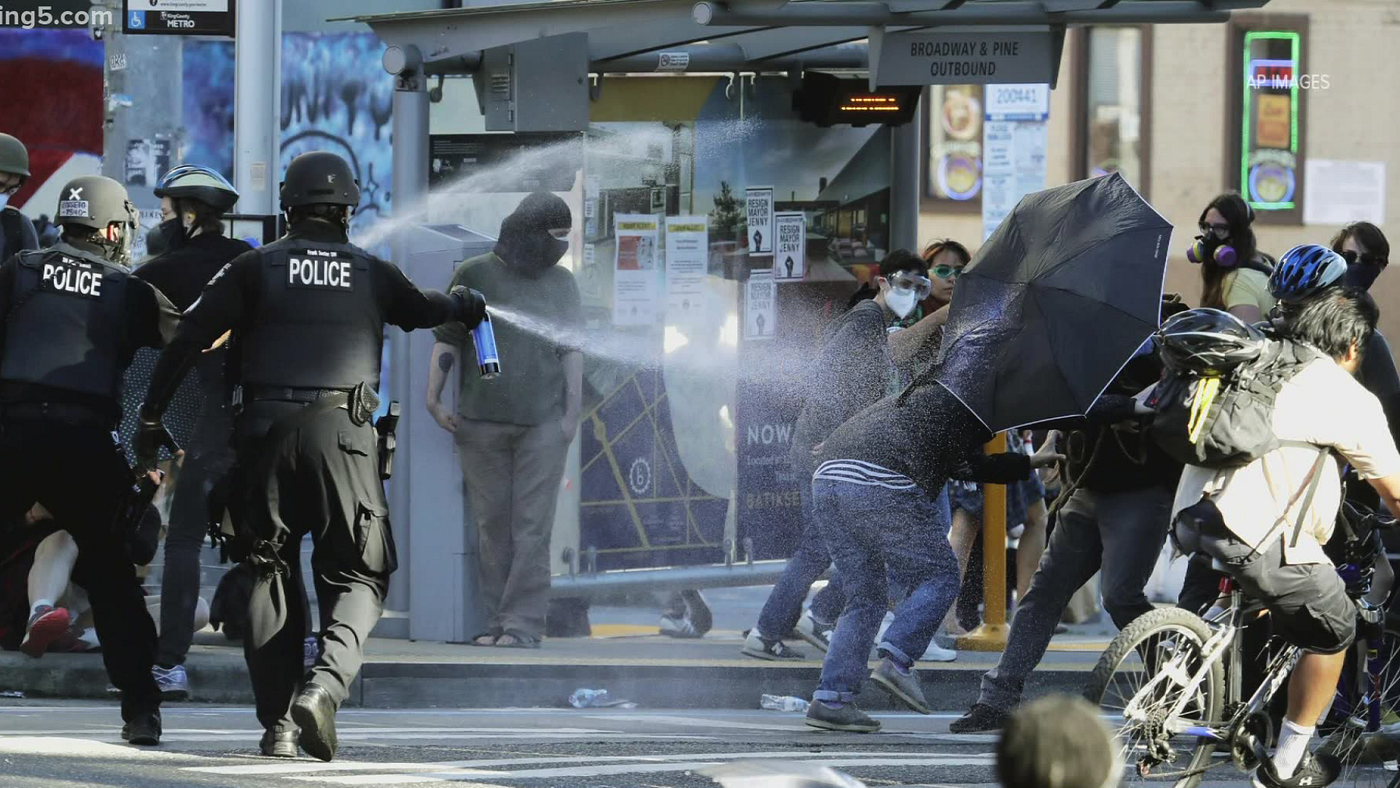
It can be formulated as a general maxim of present-day European legislation that all the natural ends of individuals must collide with legal ends if pursued with a greater or lesser degree of violence … From this maxim it follows that law sees violence in the hands of individuals as a danger undermining the legal system … It will be argued that a system of legal ends cannot be maintained if natural ends are anywhere still pursued violently. (Critique of Violence, 280)
Benjamin is now formalizing a distinction toward which he has been working towards. On one hand, there are the natural ends of individuals, which refer to aims such as survival, resistance, or self-defense. On the other hand, there are legal ends, the goals recognized by law — justice, the protection of rights, and so on. The tension Benjamin identifies arises when individuals pursue their own ends through violence. Thus, natural ends inevitably collide with legal ends.
When an individual employs violence, they assert a claim outside the legal order by acting as if they possess the authority to determine ends for themselves. For this reason, law must condemn individual violence — not because violence is innately problematic, but because it competes with the state’s monopoly on legitimate force. What law fears is not violence in itself, but the independence of violence, which threatens the stability of the legal system.
Again, the state does not condemn all violence. Police violence, capital punishment, judicial coercion, and war are all sanctioned within legal frameworks. Violence is tolerated — and required — so long as it is authorized by law. It is only when violence is pursued independently, outside the legal order, that it becomes intolerable. The violence that undermines law’s exclusive claim to force must be suppressed by law.
Benjamin moves to discuss the act of workers striking:
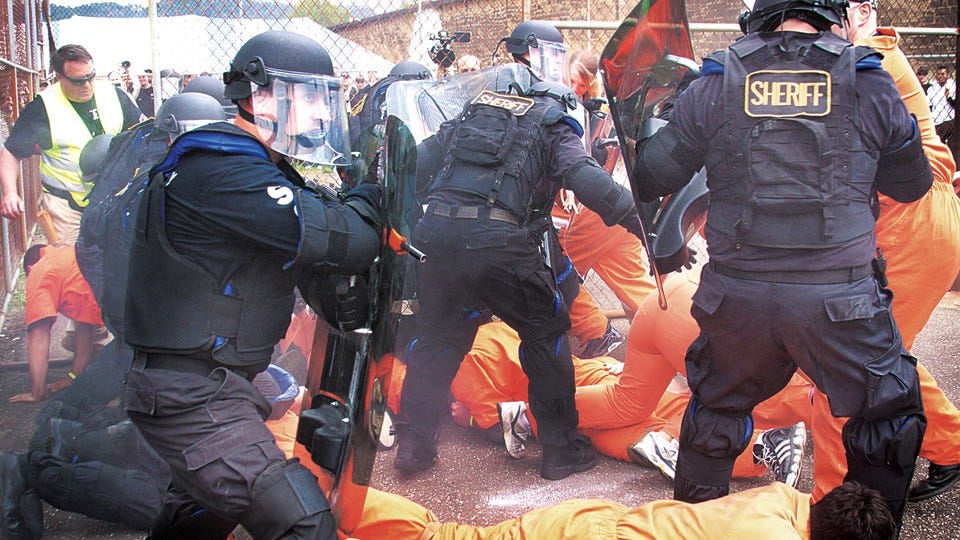
The antithesis between the two conceptions emerges in all its bitterness in face of a revolutionary general strike. In this, labor will always appeal to its right to strike, and the state will call this appeal an abuse, since the right to strike was not “so intended,” and take emergency measures. (Critique of Violence, 282; emphasis mine)
Benjamin isolates two competing conceptions of the strike. On the one hand, labor understands the strike as a legitimate exercise of a legal right. On the other, the state treats the strike as permissible only within limits that preserve the legal order. Under ordinary conditions, these two views can coexist. But Benjamin shows that this balance collapses in the case of the “revolutionary general strike,” which suspends production altogether and ceases to pursue legal ends.
At this point, the strike no longer fits within the legal framework. This means that rights are conditionally granted: the right to strike — like the rights to speech or press — remains a right only so long as it does not interfere with the state’s own ends. Once it does, its meaning is retroactively reinterpreted. In moments of crisis, the state can declare, in effect, “This is not what the right was meant to authorize. A ‘right to strike’ actually means…”
Benjamin’s analysis closely parallels Schmitt’s analysis of sovereignty. When the state perceives its existence to be threatened, it suspends the normal functioning of law and governs through emergency measures. Benjamin writes:
If that first function of violence is called the lawmaking function, this second will be called the law-preserving function. (Critique of Violence, 284)
This may be my favorite line in the entire essay. Benjamin clarifies that violence serves two functions in relation to law. The first is law-making violence. Historical moments such as conquest, revolution, and founding wars demonstrate that every legal order is established through an initial act of force. This violence does not merely enforce law; it creates law by instituting new legal ends. Once this founding moment succeeds, the violence that produced it appears retroactively legitimate (or even fades from view altogether, as though it were a neutral or necessary precondition of order).
The second function is law-preserving violence, which maintains and enforces the existing legal system. This form of violence is visible in everyday institutions such as policing, courts, prisons, and punishment. Unlike law-making violence, it does not establish new ends, but ensures compliance with those already in place.
Taken together, we learn that there is no moment at which law is divorced from violence. Law is founded through violence, and it sustains itself only through its continual application.
Benjamin continues:
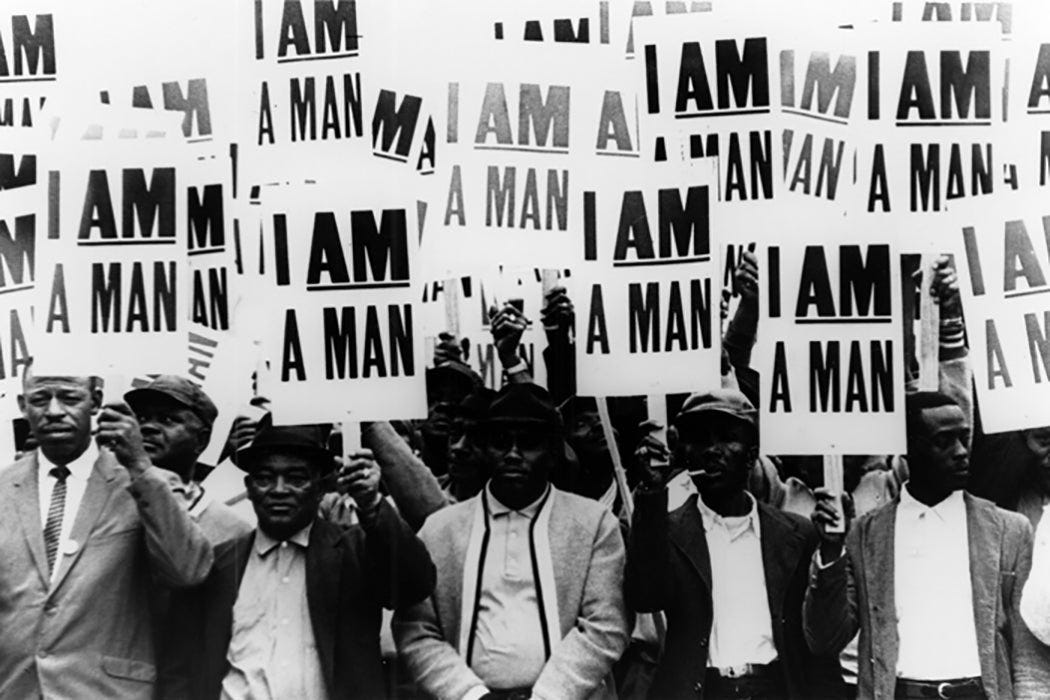
In a far more unnatural combination than in the death penalty, in a kind of spectral mixture, these two forms of violence are present in another institution of the modern state, the police. (Critique of Violence, 286)
Interestingly, the two functions of violence — law-making and law-preserving — blur into one another. The police are the most troubling example of this. On the one hand, police enforce existing laws. On the other, the police exercise broad discretion in situations where the law is vague or indeterminate. In such cases, police do not merely apply the law; they effectively decide what the law means in practice.
When an individual’s actions fall into a legally ambiguous zone, the police act based on what they judge to be appropriate or necessary. In doing so, they both preserve the law and reshape it. This is why Benjamin describes policing as a “spectral mixture” of law-making and law-preserving violence. Police power is ghostly because it does not belong neatly to any formal branch of legal authority: police are neither legislators nor judges, yet their actions often exceed what the law explicitly authorizes — and those excesses are then absorbed back into the legal order.
For this reason, Benjamin finds the police more troubling than even the death penalty. However brutal, the death penalty remains procedurally defined and formally grounded in existing law. Police violence, by contrast, exposes a structural contradiction within law itself. It reveals that law cannot fully govern ambiguous situations without relying on a force that exceeds its own rules. In the police, law confronts its own limits — and responds by granting discretionary violence where legality breaks down.
- My own analysis: the law retains the ability to retroactively determine whether an officer’s actions in legally ambiguous situations were lawful or unconstitutional. Through mechanisms of post hoc constitutional adjudication, the legal system is able to absorb this contradiction, classifying conduct after the fact as either legitimate or illegitimate.
All of this analysis results in Benjamin saying:
All violence as a means is either lawmaking or law-preserving. If it lays claim to neither of these predicates, it forfeits all validity. (Critique of Violence, 287)

To continue:
It need not be directly present in it as lawmaking violence, but is represented in it insofar as the power that guarantees a legal contract is in turn of violent origin even if violence is not introduced into the contract itself. (Critique of Violence, 288)
Benjamin explains that violence does not need to be directly present in order to retain its force. He turns to contract law as an example. Contracts appear legally neutral, mutually agreed upon, and rational, which makes it easy to imagine law as more peaceful than it is. Benjamin challenges this illusion: even when a contract contains no explicit threats or coercive clauses, it is still guaranteed by the threat of force. Courts and police stand behind every contract, and their authority rests on violence.
Violence, then, is not eliminated by law but displaced and deferred. It recedes from view while continuing to structure legal relations from behind the scenes. In this way, law does not overcome violence; it organizes and monopolizes it in a particular form.
Benjamin writes:
Lawmaking is power making, and, to that extent, an immediate manifestation of violence. Justice is the principle of all divine end making, power the principle of all mythical lawmaking. (Critique of Violence, 295)
Lawmaking does not merely employ violence as a tool; it produces relations of power. Benjamin isolates a fundamental opposition between power and justice. Power operates through what he calls mythical lawmaking — the foundational violence that establishes legal orders, borders, and sovereignty. This is the violence of conquest, empire, and founding moments that are later mythologized as necessary or inevitable. Revolutions and territorial expansion are retroactively narrated as heroic origins, allowing violence to appear justified once it succeeds.
Justice, by contrast, operates according to a different logic. Benjamin describes it as the principle of “divine end making.” Justice does not found new laws, establish borders, or produce sovereign power. Nor does it function as a future goal toward which law progresses. Instead, justice names the destruction of unjust legal orders without converting violence into authority. Where mythical lawmaking generates guilt (i.e., being guilty of a crime) and domination, divine justice abolishes these relations altogether. Justice, for Benjamin, does not create a new state; it brings an unjust one to an end. (This analysis will make more sense following the next quote.)
- Note: It is difficult to specify what Benjamin means by “divine justice” (and “divine violence” found later). Divine justice names the ending of an existing legal order without appealing to a future goal or the establishment of a new system. Benjamin does not claim that this ending guarantees a just order will follow. Divine justice solely refers to the destruction of a legal order, not to the creation of what replaces it.
Benjamin writes:
If mythical violence is lawmaking, divine violence is law-destroying; if the former sets boundaries, the latter boundlessly destroys them; if mythical violence brings at once guilt and retribution, divine power only expiates; if the former threatens, the latter strikes; if the former is bloody, the latter is lethal without spilling blood. (Critique of Violence, 297)
The importance of this distinction lies in the question Benjamin is ultimately asking: why does injustice continue to reproduce itself even when law is reformed, improved, or made more humane? His answer is that law itself belongs to the logic of mythical violence. Most traditional political theories assume that justice follows from law — that better laws eventually produce a just society. Benjamin rejects this assumption. If law is founded through violence, preserves itself through violence, and converts violence into power relations, then guilt, punishment, and domination are not accidental outcomes but structural features of legality itself. Even “good” laws continue to threaten, punish, and produce exclusions.
This distinction matters because without it, we would be left with two problematic options. The first is the claim that violence is always evil, which would condemn all individual violence while quietly excusing state violence by redefining it as lawful force. The second is the claim that violence is sometimes justified, which collapses law into morality and treats legality as a question of justice. Benjamin rejects both positions.
By distinguishing mythical from divine violence, Benjamin shows that violence which creates or preserves law always produces boundaries, guilt, and retribution. Mythical violence legitimates itself by appealing to ends and by institutionalizing punishment. Divine violence, by contrast, does not punish and does not found new authority. Because it is not institutionalized, it does not convert violence into power. Divine violence names the destruction of an unjust legal order rather than its reform or replacement.
He concludes his essay with an array of fantastic quotes, but this is one of my personal favorites:
The critique of violence is the philosophy of its history — the “philosophy” of this history, because only the idea of its development makes possible a critical, discriminating, and decisive approach to its temporal data. (Critique of Violence, 299–300)
Benjamin’s conclusion makes explicit what his essay has been doing this entire time. Acts of violence cannot be understood in isolation. Critique does not consist in asking whether a particular act of violence is legal or justified; it depends on understanding how violence operates historically. This requires tracing how violence founds law, how it continues to reproduce legal order, how it is transformed into power, and how it generates guilty individuals and domination.
Without grasping the historical development and social conditions of violence, it is impossible to distinguish between lawmaking and law-preserving violence, or between mythical and divine violence. Only through this historical analysis can we see how law disguises violence as legitimacy and necessity.
Conclusion
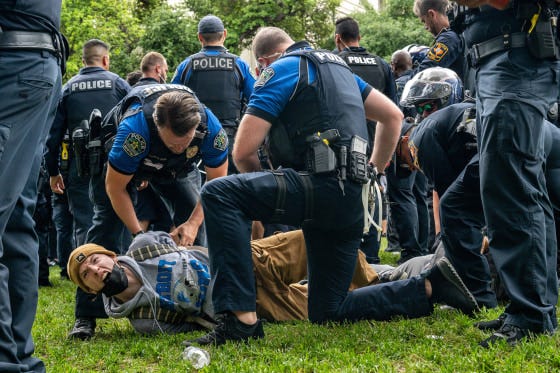
Benjamin’s Critique of Violence does more than reinterpret violence in a way that departs from classical legal philosophy; it offers a framework for rethinking law, the state, and sovereignty as such. The essay makes clear that Benjamin is far more than a literary essayist — he is a philosopher whose work enables a clearer analysis of social relations and the structures of power that sustain them.
Leave a Reply